Showing posts with label Vivien Leigh. Show all posts

Wednesday, May 29, 2013

The Unthinkable Has Happened: I Was Wrong About Something

Keira Knightly and Aaron Taylor-Johnson fall in love against a surreal backdrop in Anna Karenina (2011)
Last year in July I wrote about my expectations for the soon to be released Anna Karenina (2011) directed by the renowned Joe Wright who's obsession with Keira Knightley knows no bounds. I said that as a Russian, who was made to read Anna Karenina as if it was gospel, I couldn't bare the thought of a theatrical shit show with her and Aaron Taylor-Johnson as the two principal leads.
Well I'm watching it today, and I have to say with utmost disgrace to myself and my intuition, that I was wrong, which I never am people. 
I was literally taken aback at how good this movie looked and felt.
But this was such an interesting take on the famous story and the writing was actually up to par with a 1 1/2 hour adaptation of a 600 page novel by Tolstoy, that's saying the obvious considering the adaptation was written by Tom Stoppard. Yes it was sappy, and missed a lot of the books subtext and essential themes, but it got the jist as best as it could, and for something so highly unadaptable as that book, that's a job well done. I think perhaps maybe I understood the script better (which had it's absurd moments) because I can recite the book verbatim. 
Alicia Vikander as Princess Katerina 'Kitty' Alexandrovna
What I was impressed most about was the supporting players. I loved Matthew McFayden as Stiva, and Alicia Vikander (keep an eye on her, she's going to be the next it-girl, mark my words) as Kitty, and of course Jude Law as the torn and embarrassed Karenin, he's absolutely brilliant and I have no idea who's genius idea it was to cast him because I think he understands the material better than anyone else. In most other adaptations Karenin is seen as the villain; the heartless brute who can't forgive and cares only about his own honor and his promises to god, but Law plays him so layered and enigmatic that you get a real sense he understands that Tolstoy wrote every character in Anna Karenina to be tortured and trapped by their own inabilities to compromise. 
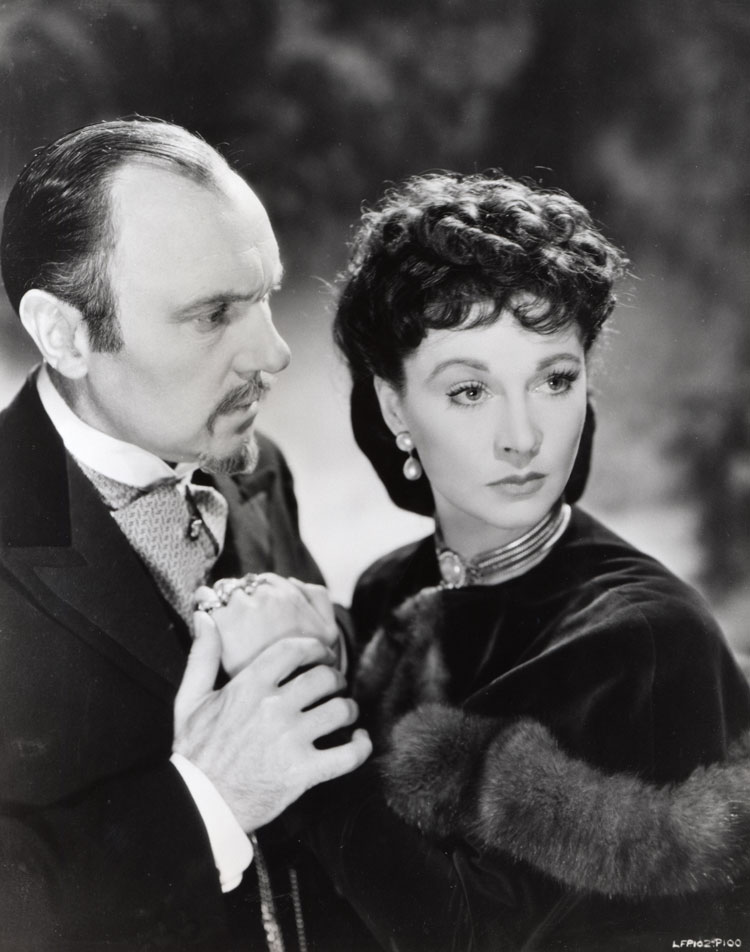
My favorite adaptation remains the Vivien Leigh/Ralph Richardson one from 1948. There's a woman that could play Anna Karenina. Criterion bought it and it's on Hulu.
I'm really starting to sound like a substitute teacher at Russian Lit 101, so I'll finish by commenting on the aesthetic. I heard that the film was done in a strangely theatrical way because they literally didn't have the money to make it a full fledged film shot on location and with meticulous attention to detail to recreate Imperial Russia. And instead of half-assing it, Joe Wright decided to take a different route, making it more of a ballet (another Russian staple) and mostly symbolic, like a fairy tale, which is essentially what Anna Karenina is; an adult fairy tale. It's supposed to be dramatic, whimsical, magical and somewhere beyond this practical world, and I think the aesthetic used captures that. All I will say that I was right about was that yeah, Keira Knightly and Aaron Taylor Johnson do not do justice to the two main characters, too young to have a grasp of the gravity of the roles their playing, and it just sucks plain and simple.

Trailer below. 


Vivien Leigh as Anna Karenina (1948) 


Friday, February 25, 2011

Seductress Pick: Vivien Leigh


This is a character study on Vivien Leigh, one of the most profound actresses to ever grace the silver screen and my personal favorite.  Vivien Leigh is a very interesting character to consider. There have been many conflicting views on what she was personally as well as professionally. What I have found through research including documentary and biography sources have concluded to be contradictory. Though I feel I have come upon certain aspects of her personality from which I can write a cohesive developed character. 
Vivien was a young girl raised in an atmosphere based on mannerisms and everything that we can attribute to the superficiality of the upper-clas of England at the time (the time being the beginning of the 20th century). Both of her parents were not only well-off, but exheuted all aspect of the English upper class. 
What is most fascinating about this woman is her raw determination. When she first laid eyes on her first husband, a barrister named Leigh Holman, she bowed that she would marry him, even though knowing that he was at the time engaged to someone else. This is the same attitude with which she pursued her great love, Lawrence Olivier. When she first met him, a friend had to remind her that she was already married after she had exclaimed that she would make him her husband. The fact that he was already married to actress Jill Esmond was of no consequence to her. This could be viewed as profound selfishness and disregard for others, and at the sam time can be attributed to a woman's determination to get what she wants. 
What is an interesting question to consider is what was more important in her life. Did she persue Lawrence Olivier because he was a successful actor and she believed that they would mesh well together, or was she in love with him. 
One story is that she was completely dissatisfied with married life. Not only that, she was also dissatisfied in a home life, being a wife and mother. When she gave birth to her daughter Suzanne, she wrote in her diary; "had a baby" and that is all. Her biggest concern was her career. 
This determination led to her obtaining the most coveted role in American film history up to the point; Scarlett O'Hara in "Gone With the Wind". Even when she was an unknown English stage actress, she had related to friends that it will be her part, no matter what. 
This is what I would like to explore in my interpretation of her character. Nothing mattered but for rising to the top, achieving what she felt she was worthy of. Her first husband was in the way, whom she subsequently divorced, and eventually, her great love, Lawrence Olivier became "in her way" as well. 
The only thing that stifled her was her mental illness, even that she would not allow to stand in her way. I do not believe that it was her intension to be famous, to be a star. But I do believe that her indelible determination was attributed to the fact that she was so incredibly independent and saw greater things for herself than just a barrister's wife, a mother, or the wife of a famous actor. She wanted to be an original, and her achieving that lead to her demise in means of her personal life. 
Even in her worst state of manic depression, she remained a seasoned professional. She had undergone everything form psycho-analysis to electric shock-treatment, sometimes at the same time that she would be working on a film. Her drive to succeed eclipsed any pain that she might have gone through personally, and herein lies the paradox. 
Though Vivien was driven, she was stiffeled. The greatest thing in her life that was stifling to her drive was her mental illness. People who know her well recount how terrible her condition was. She would explode on people and be incredibly rude to others. Once she gained composer of herself she would take time to write to them and apologize. But regarding this, her focus was her career. In the depths of the worst parts of her mental illness she still appeared in many plays, working herself to pieces as it were, disregarding her need to get well and focusing on what she felt she needed to accomplish. 
There is a very interesting dichotomy between Vivien and one of her most significant roles in both theater and film. Lawrence Olivier called "A Streetcar Named Desire" "that awful play", even though he had directed her in it in England. He thought that the character of Blanche was so close in frailty and misunderstanding that Vivien was at that point and believed that it was her total immersion in this role that had completely had pushed her over the edge.